Business project – Key takeaways
- A business project is a temporary effort with a specific business goal.
- Projects have a defined beginning and end.
- They create a specific product, service, result, or change.
- Projects differ from ongoing business operations.
- Business projects require resources such as people, time, money, and technology.
- Project management helps teams plan, execute, monitor, and close projects.
- A project is not successful simply because it is completed. It should also deliver its intended business outcome.
The word “project” comes up everywhere in business. We hear about companies launching new products, opening offices, implementing new software etc,.
But what exactly makes something a business project? It is easy to think that any important piece of work in a company is a project. In reality, there is a useful difference between a project and the regular work a business does every day.
A business project is a temporary effort taken to achieve a specific business objective. It has a defined beginning and end.
So, what exactly is a business project, and how is it different from everyday business work?
What exactly is a business project?
A business project is a temporary initiative created to deliver a defined outcome. The word “temporary” is quite important here. A project is not intended to continue forever. It has a start point and an end point, even if the exact dates change during the work.
The objective can be very different depending on the organization.
A company might start a project to:
These activities may look very different from one another. But they have something in common. Each involves a planned effort to create a specific change or result.
A business project also usually involves several moving parts. People need to know what has to be done, when it needs to be completed, what resources are available, how much it will cost, and what could prevent the project from achieving its objective.
This is the whole project management aspect.
What makes something a business project?
Not every single activity that takes time and effort is a project.
For example, answering customer emails, processing invoices, managing inventory, and attending regular team meetings are important business activities. However, they are generally ongoing operations rather than projects.
A project usually has several characteristics that make it different from routine work.
1. A specific objective
Every project needs a solid reason to get started. The company should be able to explain what should be achieved.
For example – Just saying “improve sales” doesn’t really work. You need to assertively establish that –
“We need to implement a new customer relationship management system for the sales team”
The second statement gives the project team something concrete to work on. This eventually is translated into requirements, deliverables, and deadlines.
2. A defined beginning and end
Projects are temporary. If a project is getting stretched for a really long time, without any signs of closure. You are officially in the “zombie project” zone.
But this isn’t always the case. Projects begin because a particular need, problem, or business goal has been identified.
They end when the project objectives have been achieved, or it has been cancelled.
The project could last two weeks or two years. Its length does not determine whether it is a project.
What matters is that the work is temporary and directed toward a specific outcome.
3. A defined outcome or deliverable
A project is undertaken to create something.
This could be a:
- Product
- Service
- Software application
- Business process
- Facility
- System
- Report
- Organizational change
For example, the outcome of a website development project may be a functioning website. The outcome of an office relocation project may be a fully operational office at the new location.
The deliverable gives the team something tangible to work toward.
4. Resources are required
Projects need resources, these can include –
- People
- Money
- Equipment
- Technology
- Materials
- Facilities and time
Resources are never unlimited. A PMP project manager needs to make decisions considering the resources.
For instance – if a project has a limited budget, the team may need to decide which features are essential and which can be postponed.
5. There are dependencies
Business projects involve activities that depend on each other. A team may need to complete one activity before another one can begin.
For example, a company implementing new software might need to:
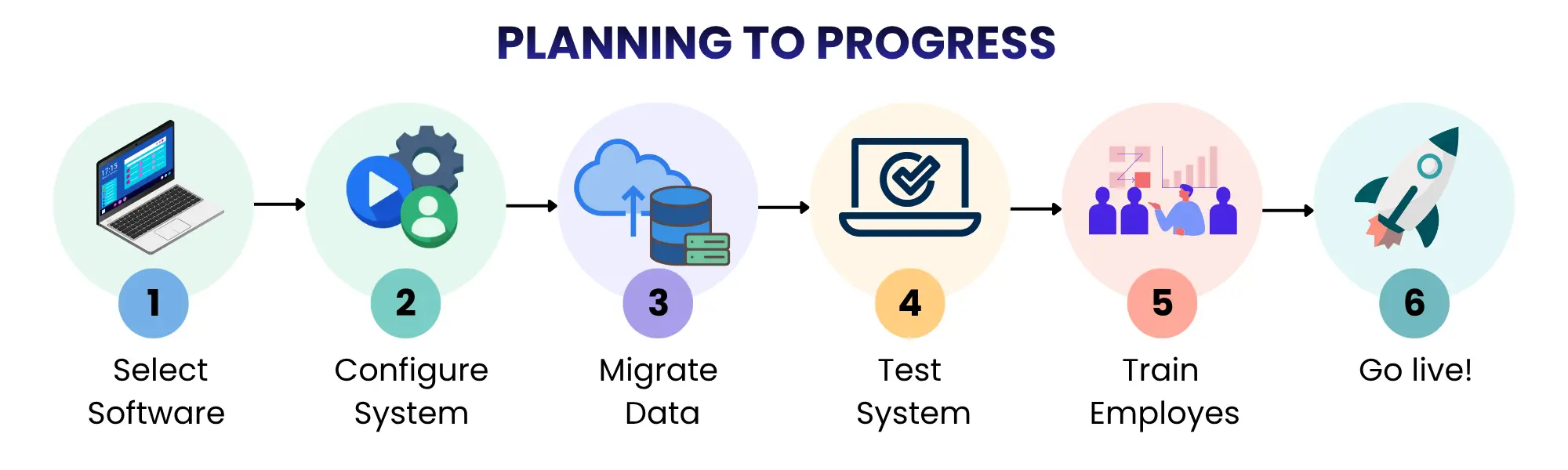
If data migration is delayed, testing may also be delayed. If testing is delayed, employee training or the final launch may need to move.
Understanding these relationships helps the project team develop a realistic schedule.
6. There is some uncertainty
No project can be planned with complete certainty. Literally anything can happen at any given time.
- A supplier may be late.
- Requirements may change.
- A technical problem may appear.
- Costs may increase.
- A stakeholder may request a change.
These possibilities create risks and uncertainties that the project team needs to consider throughout the project.
This does not mean that every project is unpredictable. Good planning can reduce uncertainty, but it cannot eliminate it completely.
Business projects vs. business operations
This is one of the most important distinctions to understand.
Projects are temporary. Operations are ongoing.
Consider a retail company. Selling products to customers every day is an ongoing operation. However, opening a new retail store is a project.
Once the store is opened, managing sales, inventory, employees, and customers becomes part of regular operations.
| Business project | Business operation |
| Temporary | Ongoing |
| Has a defined objective | Supports recurring business activities |
| Has a start and end | Continues over time |
| Creates a specific outcome | Produces recurring results |
| Often introduces change | Maintains the business |
Projects and operations are not completely separate, though. They often work together.
A project can create a new product, system, facility, or process that the operations team will continue to use after the project is completed.
Why do businesses start projects?
There can be many reasons for starting a business project. Sometimes a company sees an opportunity. At other times, it needs to solve a problem or respond to a change in the market.
Some common reasons include:
Launching a new product
A company may identify an opportunity for a new product and create a project to research, design, develop, test, and launch it.
Implementing new technology
A business may decide to replace an old system with new software. The implementation can involve requirements gathering, configuration, data migration, testing, training, and rollout.
Expanding the business
Opening a new branch, entering a new geographical market, or establishing a new manufacturing facility can require a significant amount of coordinated work.
Improving business processes
A company may want to reduce delays, improve customer experience, lower costs, or make an internal process more efficient.
A project can be created to design and implement the required improvement.
Responding to changes
Changes in customer expectations, technology, regulations, competition, or market conditions can also lead to projects.
The important point is that businesses generally do not start projects simply because they have extra work to do. Projects are usually connected to a particular need, opportunity, or desired change.
Who is involved in a business project?
A business project can involve many different people, depending on its size and complexity.
Here are some of the people that definitely are involved in any business project.
Project sponsor
The project sponsor provides organizational support. They help connect the project with broader business objectives.
The sponsor also helps make important decisions, secure resources, and address issues that require higher-level support.
Project manager
The project manager coordinates the project and helps the team move from planning to execution and completion.
Depending on the project, the project manager is responsible for the majority of the things.
- Coordinating the schedule
- Resources
- Risks
- Communications
- Stakeholders
- Project work
Project team
The project team carries out the work needed to produce the project’s deliverables.
The team could include
- Employees from different departments
- Specialists
- Technical experts
- Consultants
- Contractors
- External suppliers
Stakeholders in business project
Stakeholders are people or organizations that can –
- Affect the project
- Be affected by it
- Or have an interest in its outcome
For instance – A software implementation project could involve employees, managers, customers, IT teams, vendors, and senior leadership.
Not every stakeholder will have the same level of involvement. Some work directly on the project. While others may simply need regular updates or specific decisions from the project team.
Business projects and business strategy
Ideally, the project should support something the organization is trying to achieve.
For example, suppose a company has a strategic goal of improving its customer experience.
Several projects could support that goal:
- Implementing a new CRM system
- Redesigning the customer portal
- Introducing a customer feedback platform
- Training customer service employees
Each project has its own objective and deliverables. But the projects can contribute to a larger business goal.
This connection between projects and organizational strategy is important. Because businesses usually have limited time, money, and resources.
They need to decide which projects should be undertaken. How those projects support their broader objectives.
What is the project life cycle?
A business project does not simply move from an idea directly to completion. There are usually several stages involved.
While the exact approach can vary. A project can generally be understood through the project management life cycle :
Initiation
The business identifies a need or opportunity and defines the initial purpose of the project.
At this stage, the organization may consider questions such as:
- Why is the project needed?
- What problem are we trying to solve?
- What outcome do we want?
- Who will be affected?
- Is the project feasible?
Planning
Once the project is approved, the team does thorough R&D and planning. Because without a solid plan, a business project will never get started in the first place.
The project team has to develop a detailed plan with includes
- Defining the scope
- Schedule
- Budget
- Resources
- Risks
- Communication
- Approach
- Deliverables
Execution
Execution is the most crucial part after planning. If a project is well planned. But not executed properly, it won’t actually give the desired outcomes.
Execution is where the actual project, service, system, or change is developed.
Monitoring and control
While the work is underway, the project team needs to track everything. This determines whether the project is staying aligned with its objectives.
The team has to
- Monitor schedule
- Costs
- Scope
- Quality
- Risks
- Issues
- Changes
Closure
Once the objectives of the business project have been achieved – the project is formally completed!
The team has to hand over the final deliverables, close contracts, document the lessons learned and release project resources.
The exact terminology and structure can vary depending on the project management approach used. But the underlying idea is similar – the project moves from an identified need. To a planned outcome and eventually a completion.
How is a business project successful?
Just finishing all the planned tasks does not equal a successful project. To evaluate if a project was actually a success. The business project needs to achieve its intended outcome.
For example – imagine that a company launches a new customer portal on the planned date and within budget.
However, customers cannot use several important features because the system was not properly tested.
The project may have met some of its delivery targets. But the business outcome may not have been achieved.
This is why project teams need to understand not only what they are producing but also why they are producing it.
Success criteria should ideally be defined early so that the organization has a clear way to evaluate the project when it is completed.
Business project vs. personal project
The word “project” is not limited to organizations.
A personal project can be anything literally – it can be the smallest thing, like organizing a decently large birthday event. As long as the person has a fixed objective and requires planning it is a project!
Some common examples of person project can be
- A person renovating their home
- Planning a wedding
- Organizing a larger event
The difference with a business project is primarily the business context.
A business project is undertaken to support an organization’s goals or create value for the business, its customers, employees, or other stakeholders.
Business projects and project management
Once a business decides to undertake a project, it needs a way to organize the work. Here project management becomes a really crucial part.
Project management brings structure to the project. By helping the team define –
- what needs to be done
- Who will do it
- When it should happen
- What resources are required
- How progress will be monitored
This also helps the team to figure out ways to get the work done. Even when something does not go according to the plan.
For larger projects, this becomes particularly important. Because there may be multiple teams, suppliers, deadlines, dependencies, and risks.
A PMP project manager therefore needs to have more information than just a task list. Project managers need to understand how the different parts of the project fit together.
Conclusion
A business project is more than just a large task or a piece of important work.
The projects themselves can look very different from one organization to another. But once you understand the basic characteristics of a project. It becomes much easier to recognize one in almost any project environment.
FAQs about business projects
Here are some commonly asked business project questions on the internet. We have complied all the questions and answered them for you.
1. What is a business project?
A business project is a temporary effort undertaken to achieve a certain business objective.
2. What are some examples of business projects?
Some examples of business projects are as follows –
- Launching a product
- Implementing new software
- Opening an office
- Developing an app
- Entering a new market
3. What makes something a business project?
To have an existing business project in place, it requires –
- A specific objective
- Defined timeline
- Planned deliverables
- Resources
- Stakeholders
And most importantly, a clear outcome generally distinguishes a project from routine work.
4. What is the difference between a project and business operations?
A project is temporary and creates a specific outcome. While operations are ongoing activities that keep the business running.
5. Why are business projects important?
In order for any organization to survive and gain profit, it needs to have a business project. They help organizations to –
- Introduce changes
- Solve problems
- Achieve strategic goals
- Create new products or services.
6. Who is involved in a business project?
A project usually involves –
- Project manager
- Project team
- Sponsor
- Customers
- Business leaders
- Vendors
- Other stakeholders