TL;DR – Is PMP certification worth it for corporate teams?
- Preventing just one delayed project easily covers the training cost for an entire team.
- Creates a shared work language, controls scope creep, and reduces manager turnover.
- Corporate group batches cost much less per employee than individual retail sign-ups.
- Pick live online classes for hybrid teams or classroom trainings for single-office groups.
- Choose PMP for project leads, PgMP for senior heads, Agile for tech squads, CPMAI for AI leads, and Custom Workshops for new managers.
When HR and Learning & Development (L&D) leaders propose upskilling budgets to senior leadership, one question inevitably comes up: “Will this actually improve how our teams deliver work, or is it just another certificate on a resume?”
If you are evaluating project management training for your organization, you have likely searched whether PMP certification is genuinely worth the investment for corporate teams.
Here is a practical breakdown of the business ROI, cost structures, rollout strategies, and location options to help you make a data-backed decision.
Is PMP certification really worth the investment for companies?
Yes, provided your organization relies on cross-functional teams to deliver client projects, product launches, or internal transformations.
When managers learn project management purely through trial and error, every department ends up using different templates, risk-tracking methods, and reporting styles. Putting your project leads through a standardized PMP Certification program eliminates this operational friction by establishing a single, globally recognized language across your organization.
For HR and L&D leaders, the tangible benefits show up in four critical areas:
- Predictable delivery & fewer escalations
- Seamless agile & hybrid execution
- Stronger client confidence & RFP win rates
- Higher mid-career retention
What is the actual ROI of sponsoring PMP for your managers?
Measuring L&D ROI does not have to be an abstract exercise. The easiest way to justify the budget to your CFO (financial officer) is to compare the upfront cost of training a 15-person team against the financial impact of a single derailed project or penalty clause.
| Business dimension | Without standardization | With PMP-trained teams |
| Scope Creep | Frequent, unbilled extra work absorbed by your team | Controlled via formal change-request workflows |
| Cross-Team Alignment | Siloed updates, finger-pointing, and missed handoffs | Unified reporting and clear stakeholder ownership |
| Risk Management | Reactive firefighting after delays have already occurred | Proactive risk registers built before execution starts |
| Resource Utilization | Burnout on key leads while other team members sit idle | Balanced workload forecasting and capacity planning |
| Manager Retention | Higher mid-career turnover and costly replacement hiring | Stronger loyalty driven by sponsored career progression |
Even a 10% improvement in on-time project delivery over a single quarter easily outweighs the upfront PMP certification training and exam fees.
How much does a corporate PMP training cost in India?
When budgeting for a corporate batch, L&D teams need to check for three factors:
- 35 contact hours training (mandatory ) : Every PMP applicant must complete 35 hours of formal project management education delivered by a PMI-authorized training partner (ATP) like ProThoughts.
- PMI membership fee: Optional, though strongly recommended for corporate candidates because it lowers the overall exam fee and grants access to official PMI standards, templates, and digital guides.
- PMP exam fee: This is again paid directly to the Project Management Institute (PMI) when you are scheduling the PMP exam.
How can corporate groups maximize budget efficiency?
Enrolling employees individually at retail rates is the most expensive and fragmented approach. When you partner with an authorized training partner for a dedicated corporate batch or a multi-seat corporate voucher plan, you unlock volume discounts on training fees, centralized billing, dedicated exam-application audits, and customized industry case studies tailored to your company’s needs and challenges, not generalized training.
Online vs. classroom PMP training: which works best?
Depending on your team structure, you can choose between the two most common PMP training delivery formats or even combine both:
1) Live online instructor-led PMP training: Ideal for hybrid teams or organizations that want to bring managers from multiple regional branches into a single unified batch.
2) In-person classroom PMP training: Best for high-focus, distraction-free learning when you have a critical mass of 10 or more managers in a single city hub.
Which project management training options should HR leaders choose?
Not every employee on your org chart needs the exact same certification. One of the biggest mistakes L&D teams make is putting junior coordinators, mid-level delivery leads, and senior directors into the same training batch.
To maximize ROI, map your training rollout to each role’s daily responsibilities:
1. PMP Certification
Best for project managers, team leads, and delivery managers. Basically, people who manage projects or have 3+ years of experience.
Most mid-level managers spend all day putting out fires. PMP gives them a clear, step-by-step system to plan work, manage budgets, and handle risks across traditional and agile projects.
Explore: PMP certification training
2. PgMP Certification
Best suited for senior program managers, account directors, and VPs (8+ years of experience) overseeing multiple interconnected projects.
Managing ten projects at once requires a completely different mindset than managing one. PgMP bridges the gap between operational execution and C-suite strategy.
Explore: PgMP Certification Training
3. Disciplined Agile
Best for scrum masters, agile coaches, product owners, and teams struggling with rigid scrum frameworks.
Pure Scrum rarely works out of the box in complex enterprise environments with compliance rules and legacy dependencies. Disciplined Agile trains your teams to choose and customize their own “Way of Working” (WoW). This blends scrum, kanban, and lean practices to fit your enterprise constraints.
Explore: Disciplined Agile & Corporate Agile Programs
4. PMI-ACP
This is well suited for software development, IT services, and digital transformation squads working in fast-paced project environments.
When project requirements change every two weeks, rigid plans fail. PMI-ACP helps by giving teams practical skills across top agile methods. This helps them deliver updates faster and collaborate more effectively with business teams.
Explore: Agile Corporate Training Solutions
5. PMI-CPMAI / AI for Project Managers
Best for project managers and tech leads spearheading AI, machine learning, or enterprise automation initiatives. Most company AI projects fail to go live, not because the tech is bad, but because regular project plans cannot handle messy data and constant testing. This course gives PMP project managers a clear, step-by-step method to turn AI ideas into working business tools.
Explore: PMI-CPMAI certification training / AI for project managers
6. Custom Corporate Training
Best for newly promoted managers, functional specialists, and enterprise PMO staff.
Delivers high-impact, 1-to-2 day game-based workshops tailored to immediate workplace needs. Topics include project management fundamentals, MS project, lean/kanban, and PMO governance.
Explore: Customized Corporate Training
Corporate training delivered by ProThoughts
When selecting an upskilling partner, HRs want assurance that the provider can handle enterprise-level training.
As a PMI ATP ProThoughts has upskilled over 20,000+ professionals and partnered with 100+ leading enterprises across IT, pharmaceuticals, FMCG, manufacturing, telecom, and premier academic institutions.
Some of the renowned organizations whose teams have been trained by ProThoughts include:
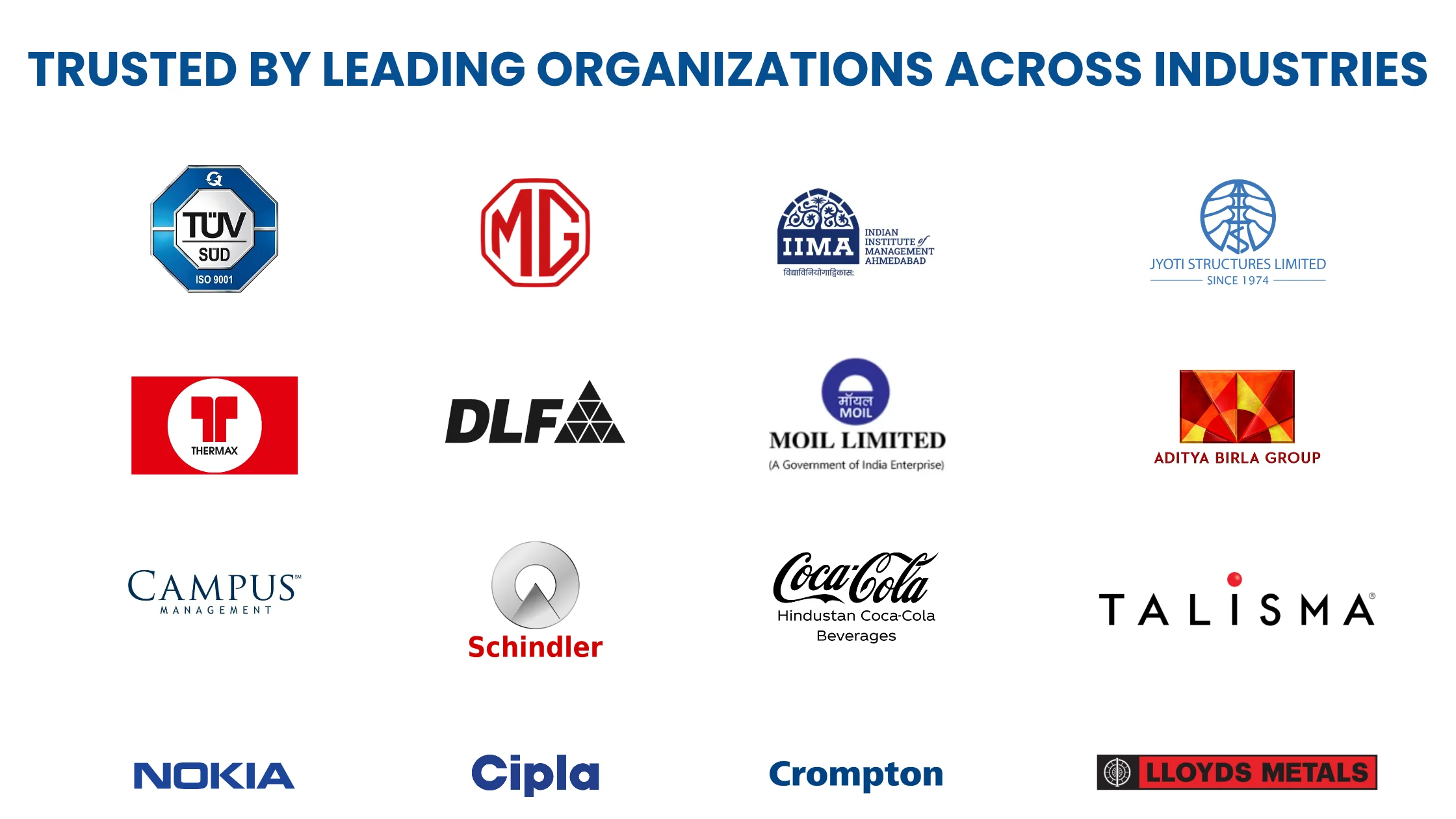
- FMCG & Consumer Goods: Unilever, Coca-Cola, General Mills, Kokuyo Camlin
- Pharma & Healthcare: Glenmark Pharmaceuticals
- Conglomerates & Infrastructure: Tata Group companies, DLF
- Telecom & Technology: Nokia
- Premier Institutions: IIM Ahmedabad
What sets ProThoughts’ corporate training apart?
ProThoughts uses a game-based, interactive methodology rather than dry slide lectures; sessions use hands-on simulations and real-world case studies to boost concept retention.
We also have in-house practitioner instructors, and batches are led by seasoned industry experts holding multiple credentials (PMP, PgMP, PfMP, PMI-ACP).
ProThoughts provides end-to-end L&D support. From pre-training eligibility audits and Rita Mulcahy study materials to PMP application or other PMI application assistance and post-training mentorship. Your HR team doesn’t have to micromanage the logistics.
Conclusion
Sponsoring PMP and project management training courses is one of the smartest investments an HR or L&D leader can make. When you connect training to fewer delays, better teamwork, and higher staff retention, your L&D budget directly helps the company grow.
Ready to train your project leaders?
Whether you want to train 5 managers in one office or 100+ leaders across different teams. ProThoughts is a PMI-authorized training partner that can build a custom training plan that fits your goals and budget.
Contact our corporate training team today for a group quote and a free eligibility check, via -info@prothoughts.co.in !
FAQs
1. What are the eligibility requirements for our employees to take the PMP exam?
To apply for the PMP exam, candidates need either:
- A four-year degree (Bachelor’s or equivalent) plus 36 months of experience leading projects within the past eight years, OR
- A high school diploma or associate degree plus 60 months of experience leading projects within the past eight years.
- Additionally, all candidates require 35 hours of formal project management training, which is fulfilled through ProThoughts’ PMP workshop.
3. How long does it take for a corporate batch to complete training and get certified?
The mandatory 35-hour training is typically completed over 4 to 5 days (either across two consecutive weekends or a dedicated weekday batch).
With structured post-class mentoring and mock exams, most working professionals clear the PMP exam within 4 to 6 weeks of completing their workshop.
4. Do we need a big team to book a corporate batch?
No. Whether you have 5 employees who want to join an upcoming batch or 50+ managers needing a private company batch, ProThoughts offers group discounts and flexible plans for both.
5. Will this disturb our team’s daily client work?
Not at all. Most companies pick weekend batches or spread classes out over a few weeks so employees can attend without missing important client deadlines.