Matrix organizational structure: key takeaways
- A matrix organizational structure creates dual reporting relationships.
- Matrix organizational structure requires clear communication and accountability.
- Employees report to a functional manager for departmental responsibilities and a project manager for project work.
- A matrix layout shows how employees connect to both functional and project leadership.
- The three main types are weak, balanced, and strong matrix structures.
- A diagram of matrix organizational structure can benefit project managers and department heads.
- Matrix management supports resource sharing, collaboration, and flexibility.
- It’s useful for managing multiple projects with shared specialists and expertise.
Matrix organizational structure allows teams to remain part of their functional departments while working on projects led by project managers. It combines functional expertise with project collaboration to share resources and manage multiple project initiatives.
This article explains matrix organization, what is a matrix structure in project management, and matrix management with diagrams. We’ll also help you understand these better with matrix structure examples and when organizations should consider using it.
So let’s begin!
What is a matrix organization?
A matrix organization is an organizational design in which employees give project reports to two management structures. It involves a functional department and a project or product team.
In traditional organizations, employees report only to a single functional manager. A matrix organization adds another reporting relationship. A matrix organization focuses on retaining quality employees and their expertise.
Now let’s look at matrix organizational structure in project management.
Matrix organizational structure in project management
A matrix corporation balances departmental priorities with the project requirements, timelines, and deliverables. It helps maintain functional expertise while giving projects access to the people and capabilities they need.
Matrix management example:
An IT developer from an organization teams up with the project team for a software project. The developer will be a part of the project and report to the project manager, as well as function in their own department while reporting to the IT lead.
This allows employees to contribute to specific projects without leaving their departments.
In the next section, let’s understand how a matrix organizational structure works.
How does a matrix organizational structure work?
- The two management dimensions, functional management and project management, work together rather than operating independently.
- Functional managers provide necessary expertise and resources. Whereas project managers coordinate those resources to deliver project outcomes.
This supports each employee in continuing to work with their department as well as contribute to the shared project. So let’s understand what is matrix organizational structure with diagram next!
Matrix organizational structure diagram
A matrix organizational structure diagram illustrates how functional departments intersect with project teams. The following simplified diagram demonstrates this arrangement:
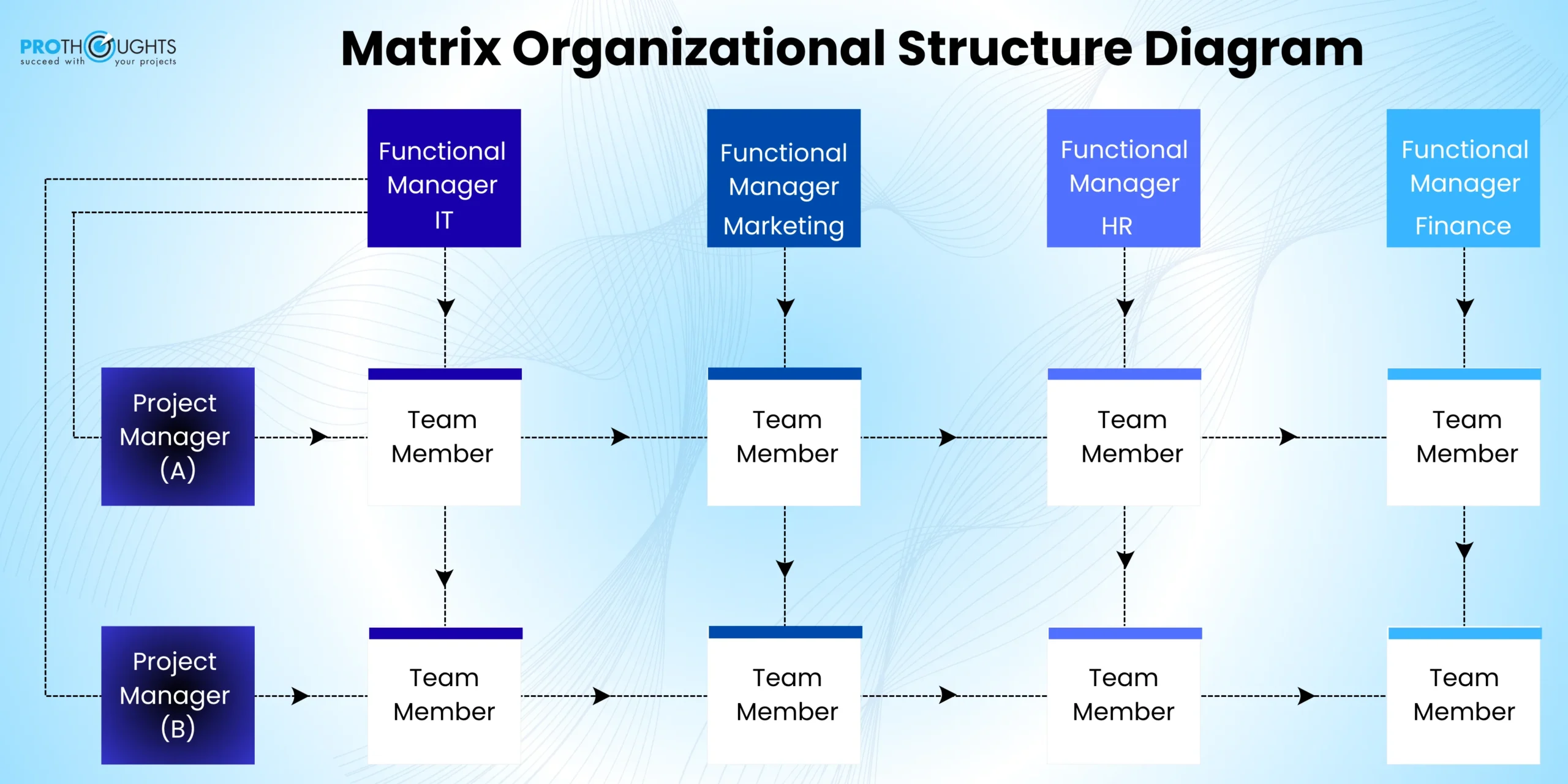
A matrix organizational structure diagram in practice has employees from multiple departments assigned to project teams and their work is coordinated by project managers. They continue to receive functional guidance from their respective department heads.
Like this blog? Then check out this one too: Raci matrix
Types of matrix organizational structure
Matrix structures can be classified into three types: weak, balanced, and strong. The main difference is the level of authority assigned to the project manager compared with the functional manager.
| Matrix Type | Project Manager Authority | Functional Manager Authority | Best For |
| Weak Matrix Structure | Low | High | Limited cross-functional coordination |
| Balanced Matrix Structure | Equal | Equal | Collaboration-focused environments |
| Strong Matrix Structure | High | Low | Project-driven environments |
Below are the types of matrix organizational structures explained:
1. Weak matrix structure
- A weak matrix structure resembles a functional organization with a few additional project management practices.
- Functional managers retain the most authority over employees and project decisions.
- The project manager plays the coordinator role and helps departments communicate and track the project progress.
- A weak matrix structure can slow down the decision-making process and cause delays in the project activities.
Weak matrix structure works best for: Organizations where departmental expertise and functional control remain the priority. As well as for projects that require limited cross-functional coordination.
2. Balanced matrix structure
- Balanced matrix distributes authority evenly between the functional and project manager.
- A balanced matrix encourages collaboration and defines responsibilities as per the organization’s needs or governance arrangements.
- Functional managers oversee technical quality, employee development, and departmental capacity, while the project managers coordinate project execution, timelines, deliverables, and communication with project stakeholders.
- A documented escalation process becomes essential if the two managers disagree.
Balanced matrix structure works best for: Organizations that need cross-functional collaboration and preserve the influence of their functional departments.
3. Strong matrix structure
- Strong matrix structure puts major emphasis on project delivery.
- The project manager holds greater authority over all decisions related to the project and team coordination in a strong matrix structure.
- Functional managers continue to provide technical expertise and professional guidance to support the project activities.
- This arrangement gives project managers more control over coordinating teams and resolving project issues.
Strong matrix structure works best for: Project organizations that manage complex initiatives and require substantial coordination and dedicated leadership. Companies needing strong delivery accountability.
The choice between these three types depends on project complexity and the authority required to deliver business objectives. Now let’s understand the advantages and disadvantages of a matrix organizational structure.
Advantages of matrix organizational structure
A matrix organizational structure offers several benefits, particularly when projects require specialized knowledge from different departments. Advantages of matrix organizational structure are explained below:
1. Better resource utilization
- Employees can be assigned to multiple projects according to their project management skills and availability instead of maintaining separate teams for every initiative.
- This reduces unnecessary duplication and helps managers make better use of existing resources.
2. Improved collaboration
- The matrix structure brings together people with different professional backgrounds to work toward common objectives.
- This encourages knowledge sharing and helps teams understand how decisions in one department affect others.
3. Greater flexibility
- Employees can move between projects as organizational priorities change in dynamic environments without restructuring their departments completely.
- This allows teams to respond to new opportunities and business requirements and makes the matrix model useful in dynamic business environments.
4. Stronger project focus
- Project managers coordinate work around defined objectives and scheduled deliverables.
- This provides a deeper view of progress that departmental structures alone may not offer and improves technical quality with timely delivery.
5. Professional development and knowledge sharing
- Employees gain exposure to various business functions and leadership approaches while managing complex project environments among diverse teams.
- These opportunities strengthen collaboration and develop the capabilities necessary for project and program management responsibilities.
Disadvantages of a matrix organizational structure
A matrix structure can create management complexity if reporting relationships and decision-making authority are not established. Disadvantages of matrix organizational structure are explained below:
1. Priority conflicts
- Functional managers may prioritize departmental responsibilities and project managers focus on project deadlines and project management deliverables.
- Employees can find themselves caught between competing demands.
2. Unclear authority and accountability
- Dual reporting can make it difficult to determine who has the final say on a decision.
- Disagreements may arise over project tasks, expectations, or changes to project scope.
3. Slow decision-making
- Matrix structure requires employees to report to more than one manager.
- This increases the time required for making important project decisions and results in delays due to complex authority arrangements and processes.
4. Increased communication requirements
- Matrix teams depend on regular communication between employees, managers, and other stakeholders.
- Important information could be missed and cause delays without consistent updates.
5. Risk of employee overload
- Workload can become difficult to manage when employees contribute to several projects while maintaining departmental responsibilities
- Managers need to review capacity and account for dependencies before assigning work.
This proves that the matrix management setup can have its own set of challenges and benefits. Professionals must assess their organizational requirements before opting for matrix management. In the next section, we’ll understand when to use a matrix organizational structure.
When should you use a matrix organizational structure?
A matrix structure is most suitable when the benefits of shared resources and cross-functional coordination outweigh the complexity of dual reporting.
Consider using the matrix management model when:
- Projects require multiple departments – A matrix structure is beneficial when the successful delivery of a project depends on collaboration between different functions of an organization.
- Specialists must be shared – Employees with specific skills are needed across several projects and makes appointing dedicated project teams impractical.
- Project priorities change often- Useful for organizations operating in dynamic environments that need cross-functional teams and constant evolution.
- Functional expertise must be preserved – Matrix corporations cause employees to maintain professional standards and career development within their departments while contributing to project outcomes.
- The organization manages complex initiatives – Matrix management works the best when projects require coordinated planning, shared accountability, and communication across different areas of expertise.
A matrix structure may be less suitable for small organizations with simple workflows or limited collaboration with insufficient management to coordinate dual reporting.
Therefore, organizations should assess their capacity and willingness to collaborate across departmental boundaries.
How to make matrix management effective
A matrix structure does not automatically improve project performance. Its effectiveness depends on how well managers coordinate people and decisions. Below are some tips on how to make matrix management effective:
- Define roles and authority – Establish clear responsibilities for project managers and functional managers. Clarify who can approve changes, assign work, and make important decisions.
- Align priorities early: Agree on project objectives and align resources with schedule commitments. Set departmental expectations before assigning employees to projects.
- Plan resources: Use resource calendars and capacity planning to understand employee availability across initiatives. Avoid overloading the same person beyond their capacity.
- Maintain transparent communication: Conduct regular coordination meetings and keep project progress reports and decisions accessible to stakeholders.
- Track performance: Review project progress alongside functional performance, such as monitoring milestones, deliverable quality, and other project aspects.
Additionally, project management tools can support this process by providing shared visibility into task ownership and progress.
Conclusion
A matrix organizational structure combines functional expertise with project-based leadership. It enables organizations to share resources and coordinate work across departments. A matrix organizational structure also allows organizations to leverage existing talent across multiple projects rather than creating separate teams for every initiative.
Clear responsibilities and aligned leadership help turn the matrix model into a practical project management framework for delivering projects with the utmost effectiveness.
So enroll in our PMP certification training to learn more advanced project management frameworks.
Matrix organizational structure: FAQs
Below are some of the frequently asked questions on matrix organizational structure:
1. What is a matrix organizational structure?
A matrix organizational structure is a management model in which employees report to a functional manager and a project or product leader. It combines departmental expertise with project collaboration.
2. What is a matrix structure in project management?
A matrix structure in project management allows project managers to coordinate employees and resources across functional departments. Their authority varies according to whether the organization uses a weak, balanced, or strong matrix structure.
3. What are the types of matrix organizational structure?
The three main types are weak, balanced, and strong matrix structures. A weak matrix gives greater authority to functional managers. A balanced matrix distributes authority more equally. Whereas a strong matrix gives project managers greater control over project delivery.
4. How is a matrix organizational structure different from a traditional hierarchy?
A traditional functional hierarchy follows a single reporting line through departmental management. A matrix structure introduces an additional reporting relationship and allows employees to remain within their departments while contributing to projects led by project managers.
5. What is an example of a matrix structure?
A technology company developing a new application may bring together software developers, cybersecurity specialists, finance professionals, and marketing staff. Each employee retains a functional affiliation while contributing to a project led by a project manager.
This matrix structural arrangement allows the company to share technical expertise across several products without creating a separate department for every development initiative.