PMO Certification: Key Takeaways
- PMO full form is Project Management Office.
- It standardizes project management practices to align projects with business objectives.
- PMO can be an individual, a team unit, or a department.
- PMOCP is a certification designed by PMI for professionals working in PMOs.
- PMOCP is suitable for PMO leaders, managers, teams, and coordinators.
- It demonstrates the ability to support and lead a PMO to deliver organizational value.
- Candidates need a specific amount of project experience or a PMP to qualify.
- PMO gives professionals exposure to governance and organizational strategies.
- PMI-PMOCP certification needs to be maintained through PDUs every three years.
Organizations run and manage several projects at the same time. It can often become difficult to maintain consistency in project management practices and ensure projects remain aligned with organizational objectives. This is where a Project Management Office (PMO) plays an important role.
A PMO in project management provides structure, standards, governance, and support for projects within an organization. But today we’ll answer in detail what is a PMO, who can qualify for a PMO certification. We will also look at the PMOCP certification and its eligibility requirements and PMO career opportunities.
So let’s begin this complete PMO and PMOCP certification guide!
What is PMO?
The full form of PMO is Project Management Office. A PMO is a centralized function within an organization that establishes and maintains project management standards, processes, and practices. PMO can be an individual or a department.
The PMO may support one project, multiple projects, or the organization’s wider project portfolio. Its responsibilities can include:
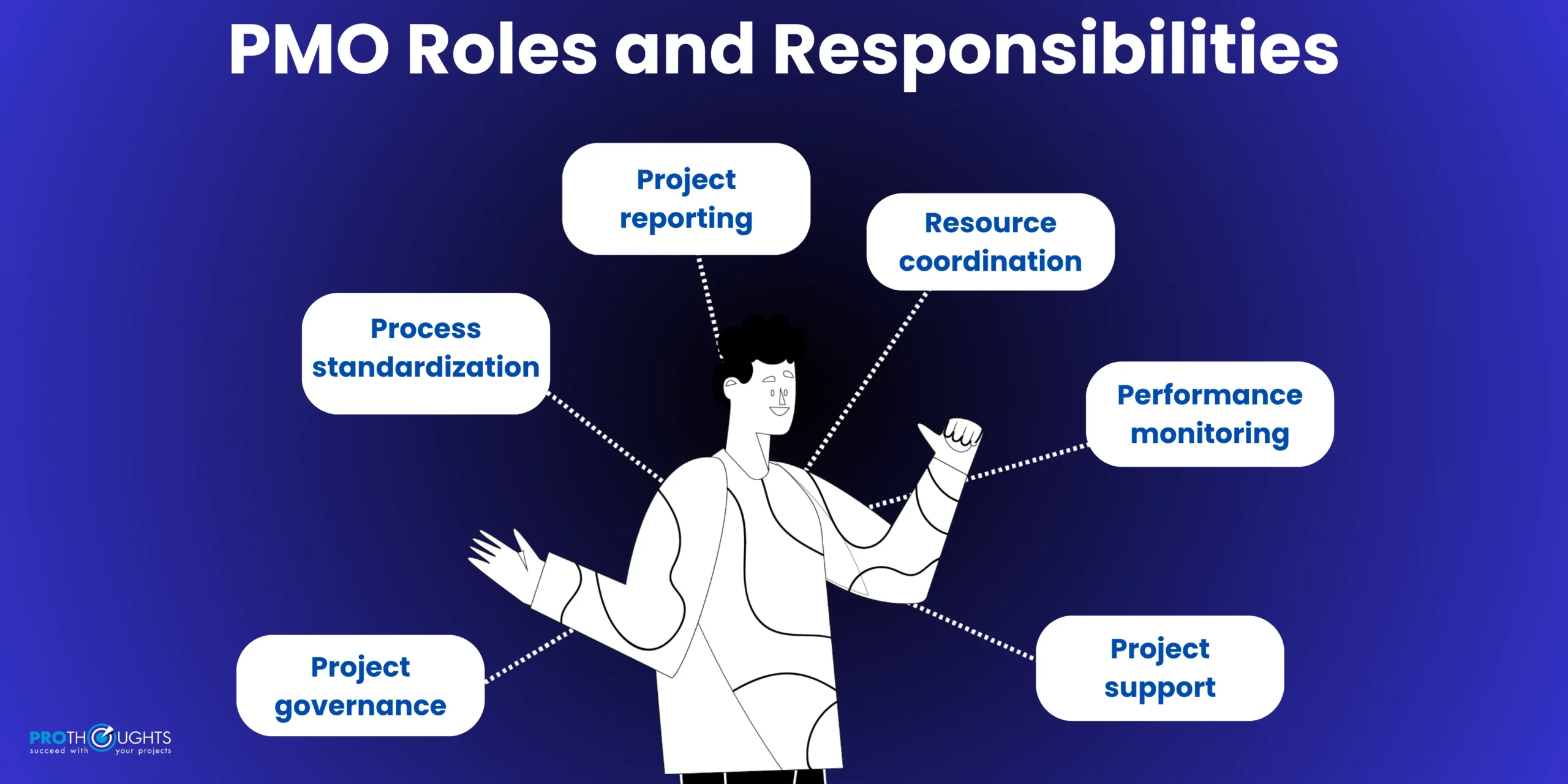
The role of a PMO can differ from one organization to another. Some PMOs exclusively provide templates or guidance to support project teams. Others have greater authority over project processes and decision-making.
PMI and other project management frameworks therefore recognize that PMOs need to be adapted to the organization’s requirements rather than following one fixed structure.
Are PMOs and project managers the same?
- A PMO is different from a project manager. A project manager focuses on the planning and execution of an individual project.
- A PMO can take a broader view across projects and help establish the standards, governance, and processes used by project teams.
So now that we understand the PMO meaning and the PMO full form, let’s look at PMO certification.
What is PMO Certification?
PMO certification is a professional credential that validates knowledge and skills related to supporting and managing Project Management Offices. The PMOCP full form is Project Management Office Certified Professional (PMOCP).
The PMOCP certification is designed for aspiring PMO professionals and focuses on the strategic value of PMOs. The certification can therefore be relevant to professionals who are already working in a PMO as well as project professionals who want to move toward PMO responsibilities.
However, PMO certification is not limited to those with the PMO job title. Professionals with other project experience can also use it to build their knowledge and organizational alignment.
So let’s look at the details of the PMOCP certification. Such as: PMO certification eligibility, PMOCP exam fees, PMO job roles and responsibilities, etc.
PMOCP certification exam eligibility
An important question professionals have before pursuing PMO certification is whether they are eligible. Candidates need to meet the following PMOCP eligibility criteria:
- Education – A Secondary degree such as a high school diploma, associate degree, or global equivalent.
- Experience – At least 3 years of project experience within the last 8 years or PMP.
- Education – 10 hours of formal PMO education/ PMOCP certification training. (Source: PMI)
These requirements also mean that project managers don’t need to hold a formal PMO position to pursue the certification. Therefore, experienced project professionals and PMO professionals can all pursue the certification if they meet the eligibility requirements.
Now let’s look at the PMOCP certification exam format and curriculum.
PMO certification cost
The PMO certification fees depend upon a number of factors such as PMI membership or non-membership. The fees may additionally differ depending on your residency. As of October 2026 PMI updates, the average PMOCP cost ranges around:
- PMOCP Training Fees: $150 USD – $350 USD (INR ₹15,000 – INR ₹30,000)
- PMOCP Exam Fees:
- PMI members – $475 USD (INR ₹32,135)
- Non-Members – $655 USD (INR ₹44,294)
- PMI Membership: $149 USD (INR ₹11,580)
- Additional Study Materials (optional) – $160 USD – $400 USD (INR ₹10,000 – INR 30,000)
The fees may additionally differ depending on your residency and mode of training (online or classroom training). So next, let’s look at the PMOCP exam format and curriculum.
PMOCP exam format and curriculum
The PMOCP examination consists of 120 questions that candidates must complete within 165 minutes. The exam can be taken at a Pearson VUE testing center or securely online. The exam curriculum is divided into six areas:
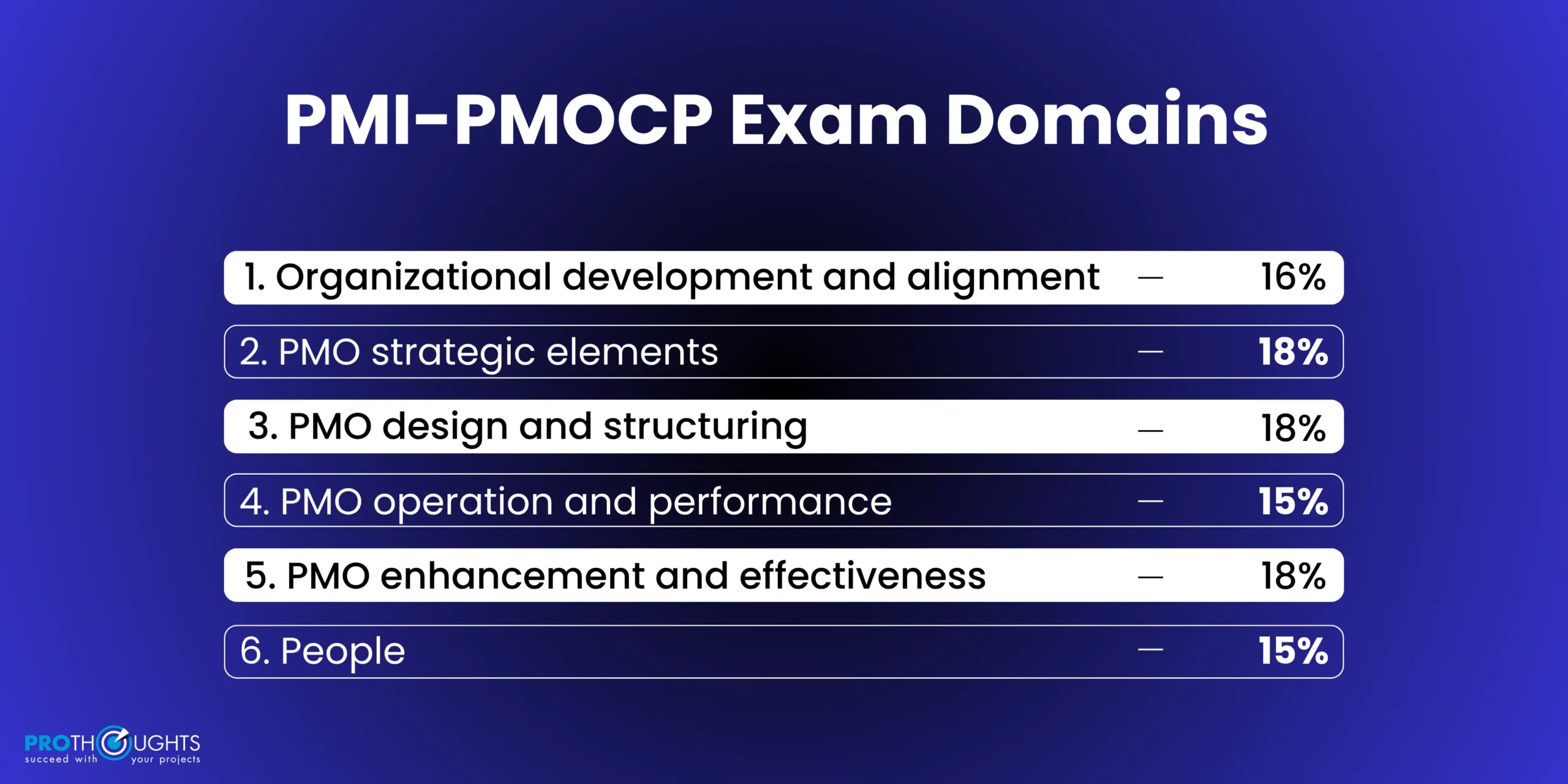
These domains show that PMOCP certification addresses PMO strategy and design for optimal performance and organizational alignment. In the next section, we’ll look at the PMO roles and responsibilities.
PMO roles and responsibilities
The specific responsibilities of a PMO professional depend on the organization’s PMO structure and the individual’s role. Some common PMO responsibilities include:
-
Project planning and coordination
PMOs establish project management processes and coordinate activities across project teams to keep projects aligned with the schedules. They further define milestones and objectives of the projects.
-
Governance and standardization
Governance includes developing project management guidelines, templates, and reporting standards. PMOs standardize the methodologies to ensure consistency across projects and compliance with organizational requirements.
-
Performance monitoring and reporting
PMOs track project progress by monitoring key performance indicators. This is important as consolidated reports and dashboards provide stakeholders with visibility into project health and help them make informed decisions.
-
Risk and issue management
Project risk management is an integral responsibility of PMOs. They identify project risks and delays, mitigate potential roadblocks, and escalate significant issues to stakeholders for corrective action.
-
Resource management
PMOs support resource allocation and capacity planning by assessing project requirements and monitoring resource availability. This allows teams to manage competing priorities.
-
Process improvement and quality assurance
PMOs evaluate the existing project management practices to identify inefficiencies and recommend improvements. This may include reviewing project performance and maintaining quality standards for documentation, etc.
-
Stakeholder communication and strategic alignment
Communication between project teams and senior leadership is vital for all projects. A PMO helps ensure that those involved in the project support broader organizational priorities and deliver their intended business value.
The PMO can therefore involve both operational and strategic responsibilities. These responsibilities allow a PMO to provide a consistent view of project performance across an organization. So let’s look at what are the career opportunities for PMOs next.
What are the career opportunities after PMO certification?
PMO certification can be useful for professionals who want to develop a career around project governance and operations, as well as PMO management. Professionals can explore PMO roles such as:
1. PMO Manager
The PMO manager role involves coordinating across projects and ensuring that PMO services support the organization’s strategic objectives. PMO managers:
- Oversee PMO operations
- Establish governance practices
- Monitor project performance
- Communicate progress
- Manage internal and external risk
2. PMO Coordinator
PMO coordinator can be a suitable starting point for professionals looking to build experience in project management processes and PMO operations. It focuses on:
- Organize project documentation
- Coordinate meetings
- Maintain action logs
- Communicate updates to stakeholders
3. PMO Analyst
A PMO analyst collects and evaluates project data to track performance and support decision-making. Their responsibilities are to:
- Maintain dashboards
- Prepare status reports
- Monitor schedules
- Track budgets
- Identify trends
- Manage risks
4. PMO Specialist
PMO specialists focus on specific areas such as governance, process improvement, and quality assurance. They help implement established practices for continuous improvement of the project initiatives.
5. Project Controls or Governance roles
These professionals focus on monitoring project performance to ensure that projects follow established controls and governance requirements. Project controls work involves cost management, schedule analysis, forecasting, and performance reporting. PMO governance roles emphasize compliance, approvals, and decision-making processes.
The exact career path further depends on your prior experience, skills, and industry. Next, we’ll look at how to maintain the PMOCP certification.
How to maintain the PMOCP certification?
PMOCP holders need to earn 30 Professional Development Units (PDUs) during each 3 year certification cycle to maintain the certification. PDUs can be earned through activities such as teaching or learning, volunteering, and content creation.
This continuing education requirement encourages certified professionals to keep developing their PMO and project management knowledge as practices evolve. Now let’s see how you can determine if PMOCP certification is right for you.
Is PMO certification right for you?
The PMOCP certification can be if you already work in a PMO or want to move into PMO-focused roles. It can be relevant if you are:
- A project manager looking to move toward PMO leadership.
- A senior project manager seeking broader organizational exposure.
- A project coordinator looking to strengthen your project management credentials.
- A PMO professional looking to validate your existing knowledge.
- A PMO analyst or specialist seeking structured knowledge of PMO strategy and operations.
- A project professional interested in:
- Governance
- Standardization
- Portfolio coordination
- Organizational alignment.
However, the certification should be considered alongside your existing experience. Certification can validate knowledge, but practical project and organizational experience remains important when progressing into senior PMO roles.
Conclusion
A Project Management Office plays an important role in helping organizations bring consistency in governance and strategic alignment to project delivery. Professionals with PMO knowledge can contribute beyond the daily execution of individual projects. This quality supports organizations in managing complex project portfolios.
So explore our PMOCP certification training to prepare for the PMOCP exam!
FAQs on PMO Certification
Here are some frequently asked questions about PMO certification:
1. What is PMO certification?
PMO certification is a professional credential that validates knowledge and skills related to Project Management Offices. PMOCP is a certification for professionals who want to support or manage and lead PMOs.
2. Who can do PMO certification?
The PMOCP certification has a set of requirements you need to meet to qualify for the PMOCP exam. They are:
- Hold a secondary degree (associate’s degree, high school diploma, or global equivalent)
- 3 years of project experience in the past 8 years or a PMP certificate
- 10 hours of PMO education
Project managers and other PMO project professionals can pursue the PMOCP certification too.
3. Is PMOCP more difficult than PMP?
Both the PMOCP and PMP certifications are hard to crack in their own right. But the difficulty of the PMOCP exam depends on your existing project management and PMO knowledge. Professionals with relevant experience may already understand several PMO concepts. And with adequate practice and studying, you can pass the PMOCP exam.
4. How many questions are on the PMI-PMOCP exam?
The PMOCP exam contains 120 questions and has a 165-minute time limit.
5. What is the PMOCP eligibility requirement?
The eligibility requirements include:
- A secondary degree or global equivalent
- Three years of project experience within the last eight years or the PMP certification.
- 10 hours of formal PMO education
6. What are the PMO certification fees?
PMI-PMOCP fees depend on your region and membership status. But as of October 2026, the PMOCP exam fees are ₹32,135 ($475 USD) for PMI members and ₹44,294 ($655 USD) for non-PMI members.
7. What jobs can I get after PMO certification?
The PMOCP certification can support career paths such as:
- PMO Manager
- PMO Coordinator
- PMO Analyst
- PMO Specialist
- Project Coordinator
The opportunities available further depend on your experience, skills, industry, and organization.
8. How long is PMOCP certification valid?
PMOCP certification is maintained through a three-year certification cycle. Certified professionals need to earn 30 PDUs during each three-year cycle to maintain their certification.
9. Is PMO certification useful for project managers?
Yes. PMO certification can be useful for project managers who want to expand beyond managing individual projects and develop skills in PMO governance. It further enhances your processes, performance, and strategic project management capabilities.